
Cosmic Order & The Vedic Calendar
>>>Scroll all the way down for a video about this Month's New Moon
The traditional name for the Vedic Tradition is Sanātana Dharma.
Sanātana means “eternal” and dharma… well, dharma means dharma. Like many words in Sanskrit, dharma is “nontranslatable”.
Often english speakers translate dharma as “righteousness”, “law”, “religion” or “morality”. But none of these are quite right… and some are misleading.
Let’s take a deeper look.
Dharma comes from the root dhṛ, which means “what holds” or “what upholds”.
But what is dharma upholding?
Here we need to understand another word… ṛtā.
Ṛtā can be translated as “cosmic order” or “natural order”.
And so it is… that would could dharma as what “upholds ṛtā”.
Natural Cosmic order is not a set of “rules” or “laws” or “morals”… think about how each rose is the same as every other rose, but unique.
Natural Order is patterned variety. And dharma is the ways in we are each a part of that patterned variety, how we understand it, and how we are called to participate with it. understand and participate in.
I'd say sanātana dharma - what we might also call Hinduism or the Vedic Tradition - is the wisdom, reverence, responsibility and methodologies to uphold the natural order.
Pattern & Variety
It is notable that ṛtā also means “season”.
What are the seaons? They are a planet’s predictable pattern of variety.
And seasons of the earth month to month depend on the Sun & Moon.
The cosmic order of our world encompasses both reliable rhythm and mysterious variety… well, the roles each of us play in life is unique. We are part of a pattern… but in built into that pattern is variety & mystery.
This is what makes life beautiful… and this is what makes the Vedic Tradition, or Sanātana Dharma so compelling.
This embraces YOU…. and it invites you to take on this wisdom, reverence & responsibility to embrace the natural order by being the best YOU you can be.
As a human being, you have some predictable patterns – biological, psychological, subtle… but you are also utterly unique – there is profound variety within the pattern.
The system of Jyotiṣa {Vedic Astrology} is a means of seeing your patterns as a human being within a greater pattern, but looking at the patterns & positions of the bodies of the sky sphere.
Jyotiṣa, known as the 'eye of the vedas' also is the system used to determine the Vedic Calendar - a key part of sanātana dharma called the panchanga.
The Vedic Calendar
The panchanga is the “vedic calendar”. This calender, determined by the positions & movements of the Sun & Moon has a glorious elegance & intelligence – much like the entire vedic system.
The Vedic Calendar is a constant invitation to uphold the cosmic order in real time. And in this way, it is a means to living a life of dharma.
As the “eye of the vedas” Jyotiṣa uses the luminaries to help us to see what to do, and when.
This calendar guides us in which rituals, actions, invocations can be done by all of humanity for success in life – the full spectrum of material & spiritual.
The Sun is lord of Dharma & the Intellect and is associated with a reliable & predictable routines. Meanwhile, the Moon is lord of the Mind and Emotions is is associated with mystery, intuition, moods & changeability.
The two luminaries bless us with the Vedic Calendar - a perfect expression of both pattern and variety.
Moon: Measurer, Mood-Maker, Lord of Ritual
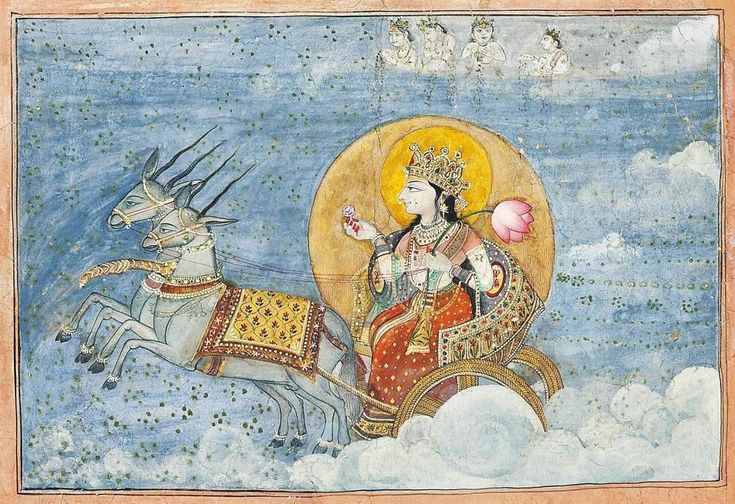
In particular, the phases of the moon, our celestial mood maker who’s english name comes from the Sanskrit ‘to measure’ is used to determine rituals.
And New Moon and Full Moon are perhaps most ritual-rich times. In general, New Moon invokes total release before a renewal, while full moon invokes culminations.
But each new & full moon has a different “mood” due to their constellational position.
The upcoming New Moon is incredibly potent and launches us into the most ritual-rich time of year in the Vedic calendar {more on that yet to come}
Enjoy the video below about this New Moon!
August New Moon {read the prompts below!}
The August Amavasya {new moon} is very potent, and signals themes of karma and transformation, blessings and curses, release and renewal and more.
The peak moment of New Moon places the moon in Maghā Nakṣatra – the constellation symbolized by the ancestral throne.
However, in Jyotish we calculate the “NEW MOON” based on what constellation the moon is in 12 degrees before peak, which in this case is Āśleṣa Nakṣatra – the constellation of serpents.
The experienced practitioner of Jyotiṣa will take this as the Āśleṣa Amavasya. {see reasons for this below}.
For the purpose of ritual and psychological impact, we take this new moon as Āśleṣa. However, the Māghā influence is meaningful. We might say the moon is straddling the meanings of both Serpents & Ancestral Thrones.
The Video was made for members of the Nectar of Time. We decided to share it with you!
Merging meanings of Maghā & Āśleṣa Constellations I would say the potent themes of this New Moon are:
~ Karma
~ Spiritual Alchemy
~ Ancestral Blessings
~ Release, Rebirth, Regeneration
~ How you Wield Your Time
~ Desire
~ Addiction, Trauma
~ Lineage
~ Poisons that Heal {think homeopathy}
~ Intertwining
~ Intuition
~ The Spine
~ The Past
~ Time & How we Wield it
~ Power, influence, secrets
~ Opportunities vs Obstacles
So this New Moon is a potent time to
✔️Notice your desires… what is underneath a desire and can it be directed toward something auspicious?
✔️Witness karmic patterns and consider what can be released or unravelled for good?
✔️Appreciate your ancestral blessings. Be open to gently healing inherited wounds. Listen and watch for messages or omens from ancestors who are your guardians.
✔️Sādhanas can include Yoga Nidrā, Mantras to Gaṇeśa or the Goddess & offerings to the Pitṛs {ancestors}
A note for students of Jyotiṣa
Why do we say this is an āśleṣa amavasya, not maghā?
Jyotish as you know is not a “science” … it requires the art of the practitioner to know how to go beyond the numbers. Hart taught us to see which way to “row the boat” so to speak during these gray area times.
1.Traditionally, the New Moon of August is called the “āśleṣa amavasya”, even in the years it is off by a nakṣatra.
2. By new moon-new moon approach, we are still in the month of nāga Panchami, so very much in the influence of the serpent.
3. Most human beings on globe had an āśleṣa amavasya day – when you account for the solar aspect in panchag. South Asia, East Asia, Americas, Europe & Hawaii, all āśleṣa {you have to see when is sunrise}. This matters like the way we get affected by eclipses even if it doesn’t happen over our location.
4. Retrograde Saturn increases āśleṣa themes
5. Rāhu-Ketu {the celestial serpent} on the same axis as the Sun. So the solar month has themes like āśleṣa
6. This new moon leads right into eclipse season. The next new moon ends eclipse season. This exaggerates the āśleṣa themes during this new moon.